

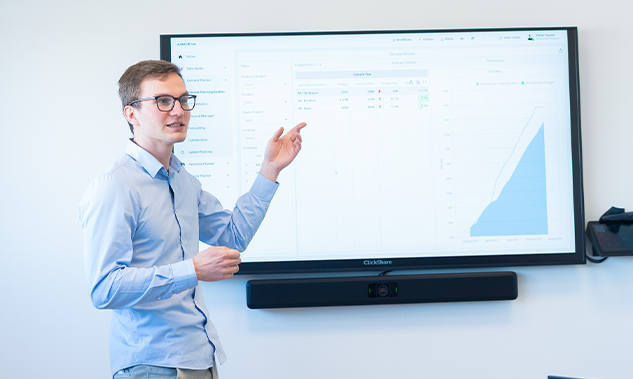
Corporate Performance Management

Unlock sustainable value and strategic growth with Corporate Performance Management (CPM)

Value creation should be measured with value metrics which clearly illustrate the tradeoffs among revenue, costs, and the investment required to generate those returns. These metrics are used not only as diagnostics, but for target setting, and ongoing monitoring for realization of those objectives. When done properly, Corporate Performance Management (CPM) serves as a compass to navigate the seemingly ever-shifting terrain.

For manufacturing companies, CPM is the backbone for navigating complexity, margin pressure, and fragmented data across departments. It enables organizations to move beyond traditional, siloed profitability reporting and delivering transparency, actionable insights, and objective portfolio decisions.

The outcomes of Corporate Performance Management with Solventure Perform

What Changes Once Implemented:

  • More Accurate Forecasts: CPM brings together financial, operational, and strategic data, improving both accuracy and buy-in.

  • Faster, Better Decisions: Integrated analytics and scenario planning enable leadership to evaluate alternatives and act decisively.

  • Financial Resilience: By balancing service, cost, and cash, CPM maximizes value and supports strategic growth.

Quick Wins:

  • Improved visibility across the value chain

  • Faster, more effective meetings

  • Early identification of risks and opportunities

Long-Term Improvements:

  • Higher margins and lower working capital

  • Improved cross-functional trust and collaboration

  • Sustainable, strategy-driven growth

  • Enhanced agility and resilience in the face of market volatility

Destrooper Biscuits improved portfolio transparency, reduced inventory, and achieved a 3% EBITDA improvement.

With over 1030 SKUs across 3 brands, Destrooper Biscuits transformed a complex portfolio into clear growth opportunities, enabling faster, smarter decisons and stronger profitability. Using the Solventure Perform Suite, teams gained real-time insights, aligned cross-functional decision-making, and implemented process-driven portfolio management.

Resources

FAQs about CPM

  • CPM is a holistic approach that aligns financial, operational, and strategic planning to optimize performance, drive margin improvement, and support sustainable growth. Effective CPM bridges corporate strategy and execution by:

    • Translating strategic goals into actionable portfolio objectives

    • Benchmarking performance to set realistic, actionable targets

    • Using value tracking and performance assessments to ensure continuous improvement

    Solventure’s approach ensures that value identification and tracking are embedded in the process, supporting both immediate efficiency and long-term growth.

  • Solventure has innovated an alternative approach to benchmarking. One which maps to corporate strategy, evaluates tradeoffs across financial and operational levers, delivers actionable insights, and ensures deliberate and meaningful target setting for the organization.

    When further combined with Solventure’s broader strategy-driven supply chain methodology, this facilitates a more competitive organization aligned to customer drivers and powered by a responsive supply chain to surmount market variability and complexity.

  • Global manufacturers face a tough reality: data locked in silos, complex product portfolios, and slow decisions that cost time and margin. The Solventure Perform Suite changes that. Built to bridge the gap between corporate strategy and execution, it empowers your teams to make faster, smarter, and financially impactful decisions.

    Powered by the Portfolio Optimizer and Data Orchestration modules, the Perform Suite brings together financial, operational, and strategic intelligence, enabling a truly integrated approach to performance management.

  • While FP&A focuses on financial planning and analysis, CPM integrates financial, operational, and strategic data, enabling cross-functional decision-making and continuous improvement.

  • Key KPIs include EBITDA, margin improvement, working capital, inventory turns, GMROI, and scenario-based performance metrics.

  • Challenges include overcoming siloed data, ensuring cross-functional collaboration, establishing clear ownership, and embedding CPM into regular business cycles (e.g., S&OP, IBP).

Ready to unlock corporate performance excellence?

Landingspage_Header